Psoriasis is a chronic immune-mediated skin condition causing accelerated skin cell turnover that produces the characteristic raised, red plaques covered with silvery-white scales. It affects approximately 7.5 million Americans and carries substantial physical discomfort, psychological burden, and — for patients with moderate to severe disease — significant systemic inflammation increasing cardiovascular and metabolic risk. Modern psoriasis treatment has been revolutionized by biologic medications, offering skin clearance and symptom relief previously unattainable. This guide explains contemporary psoriasis management at dermatology clinics.
Types of Psoriasis
Plaque psoriasis (the most common type) produces thick, scaly plaques predominantly on elbows, knees, scalp, and trunk. Nail psoriasis affects up to 50% of patients. Psoriatic arthritis — joint inflammation developing in 30% of psoriasis patients — requires rheumatological management. Guttate, inverse, pustular, and erythrodermic psoriasis are less common but sometimes more severe variants.
Treatment Approach by Severity
Mild Psoriasis
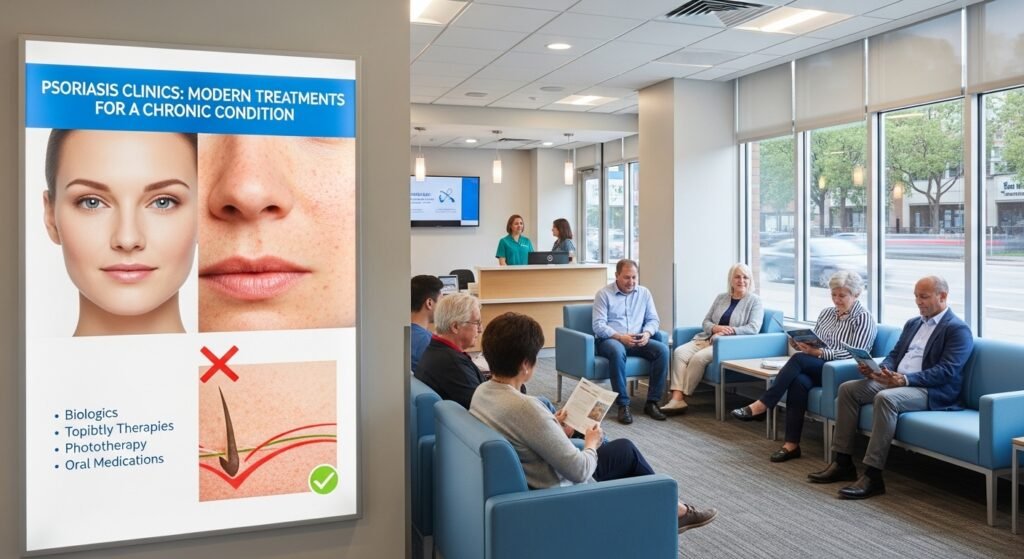
Topical treatments — corticosteroids, calcipotriene (vitamin D analogue), tazarotene (retinoid), roflumilast foam (PDE4 inhibitor) — effectively manage mild psoriasis affecting limited body surface area.
Moderate to Severe Psoriasis
Phototherapy (UVB light treatment) provides effective control for many patients without systemic medication. Systemic non-biologic treatments (methotrexate, cyclosporine, acitretin, apremilast) are appropriate for wider disease. Biologic medications — TNF inhibitors (adalimumab, etanercept), IL-12/23 inhibitors (ustekinumab), IL-17 inhibitors (secukinumab, ixekizumab), and IL-23 inhibitors (guselkumab, risankizumab) — produce complete or near-complete skin clearance in the majority of patients with moderate to severe psoriasis.
Conclusion
Psoriasis management has been transformed by biologic therapy. If your psoriasis is not adequately controlled with topical treatment, discuss escalation to systemic therapy or biologics with your dermatologist. No patient with significant psoriasis needs to accept incomplete treatment when highly effective options exist.
FAQs – Psoriasis
Q1. Is psoriasis contagious?
A: No. Psoriasis is an immune-mediated condition — not infectious or contagious. It cannot be transmitted through any form of contact.
Q2. Does psoriasis have triggers?
A: Yes. Common triggers include streptococcal infections (throat infections can trigger guttate psoriasis), stress, certain medications (beta-blockers, lithium, antimalarials), skin injury (Koebner phenomenon), alcohol, and smoking. Identifying and managing personal triggers complements medical treatment.
Q3. What is psoriatic arthritis and how is it treated?
A: Psoriatic arthritis is an inflammatory arthritis developing in 30% of psoriasis patients, causing joint pain, swelling, and potentially destructive joint damage. It is managed by rheumatologists, often with the same biologics used for psoriasis skin disease.
Q4. Does psoriasis affect internal organs?
A: Psoriasis is a systemic inflammatory condition associated with increased risk of cardiovascular disease, metabolic syndrome, diabetes, and depression — not just skin disease. This systemic inflammation is addressed through appropriate treatment and cardiovascular risk management.
Q5. Will my psoriasis ever go away permanently?
A: Psoriasis is a chronic condition with no definitive cure. However, many patients achieve prolonged remission on or off medication. Treatment can suppress disease to complete clearance in many patients — particularly with modern biologics.