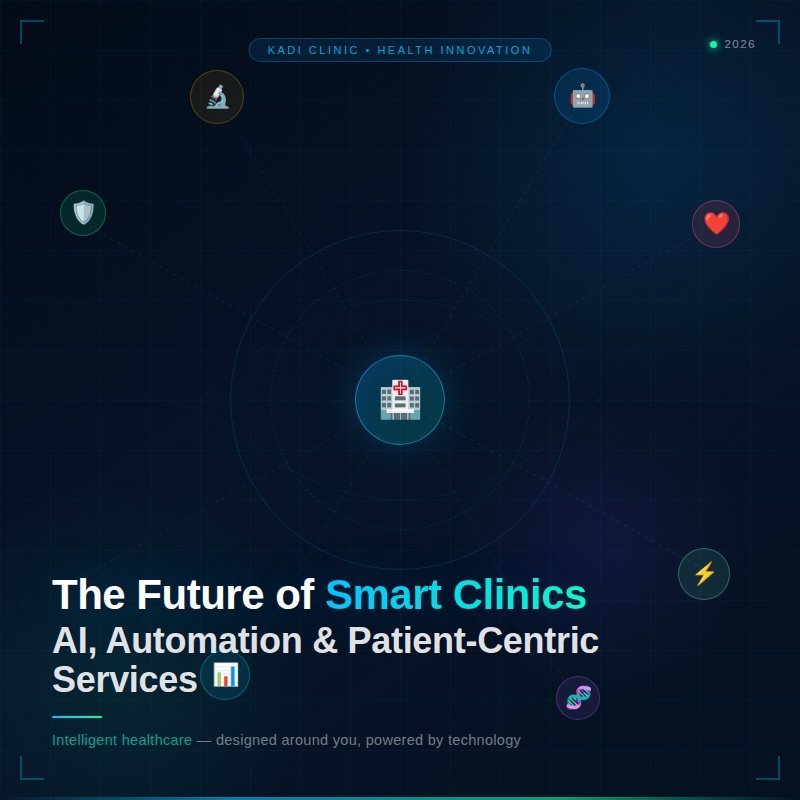
Discover how smart clinics in India are transforming healthcare through AI, automation, digital records, and patient-centric services. Learn real-life examples, benefits, challenges, and the future of modern healthcare clinics.
Healthcare in India is changing faster than ever. A few years ago, visiting a clinic usually meant standing in long queues, carrying paper files, and waiting hours just to meet the doctor for a few minutes. Today, things are slowly becoming smarter. Many clinics are now using Artificial Intelligence (AI), automation tools, online appointments, digital health records, and virtual consultations to improve patient care.
These modern healthcare centers are often called “smart clinics.” They focus not only on treatment but also on making the patient experience easier, faster, and more comfortable.
Imagine booking a doctor appointment through WhatsApp, receiving digital prescriptions on your phone, getting reminders for medicines automatically, or using AI tools that help doctors detect diseases earlier. This is no longer science fiction. It is already happening in many Indian cities.
The future of healthcare will not depend only on big hospitals. Smart clinics are becoming an important part of India’s healthcare system because they can provide affordable and accessible healthcare to more people.
What Are Smart Clinics?
Smart clinics are healthcare centers that use modern technologies like AI, cloud systems, automation, wearable devices, and digital platforms to improve healthcare services.
Unlike traditional clinics, smart clinics focus on:
- Faster patient service
- Better diagnosis support
- Digital records management
- Remote consultation
- Personalized treatment
- Reduced paperwork
- Better patient communication
For example, instead of writing everything manually, doctors can now use electronic medical records (EMRs). Patients do not need to carry physical reports because their medical history is stored digitally.
Many clinics are also using automated appointment systems that reduce waiting time significantly.
According to the World Health Organization, digital health technologies can improve healthcare quality, efficiency, and accessibility across countries.
The Role of AI in Smart Clinics
Artificial Intelligence is one of the biggest reasons behind the rise of smart clinics.
AI does not replace doctors. Instead, it helps doctors make quicker and more accurate decisions.
1. Faster Disease Detection
AI systems can analyze medical reports, X-rays, CT scans, and blood test data within seconds. This helps doctors identify diseases earlier.
For example, some AI tools can detect signs of tuberculosis, cancer, or heart disease from imaging scans faster than traditional methods.
Indian healthcare startup Qure.AI is already working on AI-based diagnostic solutions that help detect diseases early.
2. Smart Appointment Management
Many clinics now use automated systems to manage appointments. Patients can choose time slots online and receive reminders automatically.
This reduces overcrowding and saves time for both patients and doctors.
3. AI Chatbots for Basic Support
Some clinics use AI chatbots on websites or WhatsApp. These bots answer basic questions like:
- Clinic timings
- Appointment booking
- Medicine reminders
- Test instructions
This improves patient convenience, especially for working professionals.
4. Personalized Healthcare
AI can analyze patient history and suggest personalized healthcare advice.
For example, diabetic patients may receive reminders for sugar monitoring, diet tips, or follow-up appointments automatically.
Automation Is Making Clinics More Efficient
Automation is helping clinics reduce manual work and improve daily operations.
Earlier, clinic staff had to handle everything manually — billing, appointment entries, patient records, and prescriptions. This often caused delays and errors.
Now, automated systems handle many repetitive tasks.
Automated Billing and Payments
Digital payment systems and automated billing software make transactions faster and more transparent.
Patients can pay through UPI, cards, or mobile wallets within seconds.
Digital Prescriptions
Doctors can now generate digital prescriptions instantly. Patients receive them directly on their phones.
This also reduces problems caused by unreadable handwriting.
Electronic Medical Records (EMR)
Digital records allow doctors to access patient history quickly.
Suppose a patient visited the clinic six months ago for blood pressure treatment. The doctor can instantly view previous reports, medicines, and treatment history without searching through paper files.
Patient-Centric Services Are Becoming the Main Focus
Earlier, healthcare mostly focused on treatment after illness. Smart clinics are changing this approach.
Now, the focus is shifting toward patient comfort, preventive care, and long-term health management.
Shorter Waiting Time
Nobody likes waiting for hours at clinics.
Smart token systems and online appointments help reduce crowding and waiting time.
Some clinics even allow patients to track their queue number through mobile apps.
Telemedicine and Online Consultations
Online consultations became extremely popular after the COVID-19 pandemic.
Today, many Indian patients prefer video consultations for minor health issues because it saves travel time and money.
This is especially useful for elderly patients and people living in smaller towns.
Remote Monitoring
Wearable devices like smartwatches can monitor heart rate, oxygen levels, sleep patterns, and physical activity.
Doctors can use this data to monitor patients remotely.
For example, a heart patient can share smartwatch health data with the doctor regularly without visiting the clinic every week.
Real-Life Examples in India
India is already seeing major developments in smart healthcare.
Recently, a government-run AI clinic was launched in Noida to help detect serious illnesses like cancer and heart disease using AI and genetic screening technology.
In Ahmedabad, an AI-supported dialysis ecosystem was introduced to improve renal healthcare with remote monitoring and AI-driven clinical support.
Large hospital groups like Apollo Hospitals are also investing heavily in AI tools to reduce staff workload and improve patient care efficiency.
These examples show that India is moving steadily toward smarter healthcare systems.
Challenges Smart Clinics Still Face
Even though smart clinics offer many benefits, there are still some challenges.
High Setup Costs
Small clinics may find it expensive to install advanced software systems and AI tools.
Data Privacy Concerns
Digital health records must be protected carefully. Patient data privacy is extremely important.
Internet and Technology Gaps
In rural areas, internet access and digital literacy can still be limited.
Some patients, especially elderly people, may feel uncomfortable using apps or digital systems.
A Reddit discussion about smart clinics in India highlighted that many smaller clinics still depend heavily on assistants because some patients are not comfortable with digital systems yet.
AI Cannot Replace Human Doctors
AI can assist doctors, but human judgment remains essential.
Healthcare is emotional as well as technical. Patients still need empathy, trust, and proper communication from real doctors.
The Future of Smart Clinics in India
The future looks promising.
Over the next few years, smart clinics may become common even in smaller cities and towns.
We may see:
- AI-assisted diagnosis in regular clinics
- Voice-based healthcare systems in regional languages
- Smart wearable integration
- Home-based digital health monitoring
- Faster lab testing using automation
- Better rural healthcare through telemedicine
India’s growing digital infrastructure and smartphone usage will likely speed up this transformation.
Healthcare may become more preventive instead of reactive. Instead of waiting to get sick, people will receive early warnings and personalized health guidance through technology.
According to the World Health Organization, responsible digital health systems can improve healthcare accessibility and efficiency worldwide.
Sources
https://l1nq.com/7ku3ova
https://l1nq.com/5d8dnes
Conclusion
smart clinics are transforming the future of healthcare in India. AI, automation, and patient-centric services are making clinics faster, more efficient, and more accessible. From online appointments to AI-assisted diagnosis and digital records, healthcare is becoming more connected and convenient for patients. However, technology by itself is insufficient; the true success of smart clinics will depend on striking a balance between innovation, human care, trust, and affordability. The future healthcare system will probably combine cutting-edge technology with caring medical professionals. Clinics that are able to do so will be at the forefront of Indian healthcare.
FAQs
1. What is a smart clinic?
A smart clinic is a healthcare center that uses technologies like AI, automation, digital records, and online consultation systems to improve patient care and clinic efficiency.
2. How does AI help in smart clinics?
AI helps doctors by analyzing medical data, supporting diagnosis, managing appointments, and improving patient monitoring systems.
3. Are smart clinics available in India?
Yes, many clinics and hospitals in India are already using digital health technologies, AI tools, and automated healthcare systems.
4. Can AI replace doctors in the future?
No, AI is designed to assist doctors, not replace them. Human experience, communication, and decision-making remain very important in healthcare.
5. What are the biggest benefits of smart clinics?
The major benefits include reduced waiting time, better patient management, faster diagnosis support, digital health records, and improved patient convenience.