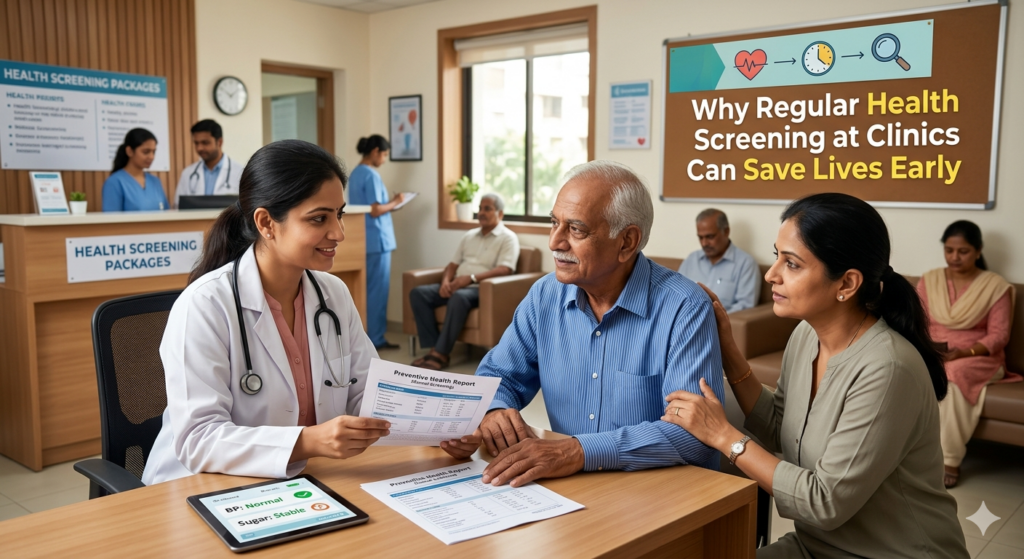
Discover why regular preventive health screenings at Indian clinics are essential. Learn how routine check-ups catch silent killers like diabetes and hypertension early, saving lives and reducing heavy medical bills.
Think about the last time you took your car or scooter to the mechanic. You probably didn’t wait for the engine to catch fire before booking a service, right? You took it in for routine oil changes, brake checks, and general tuning just to make sure it runs smoothly.
Yet, when it comes to our own bodies, our approach is completely different. In most Indian households, there is a deep-seated mindset: “If it doesn’t hurt, why see a doctor?” We treat clinics like emergency rooms rather than maintenance centers.
Unfortunately, this reactive approach is costing us dearly. According to recent national surveys, lifestyle-related conditions like diabetes, high blood pressure, and heart ailments are surging dramatically across India. The scariest part? These diseases are notoriously quiet. They slip into your life without a single loud symptom, earning them the title of “silent killers.”
The Illusion of Feeling “Perfectly Fine”
The biggest mistake we make is equating the absence of pain with being healthy. Many dangerous medical conditions do their worst damage behind the scenes.
Because his clinic caught it early, Ramesh didn’t even need heavy medication. A simple tweak to his daily routine, cutting down on late-night ordering, and walking 30 minutes a day brought his levels right back to normal. Early screening shifted his path from a major medical crisis to a highly manageable lifestyle adjustment.
What Makes Regular Screenings True Lifesavers?
1. Catching the “Silent Killers” Before the Damage Starts
Conditions like hypertension (high blood pressure) and high cholesterol do not knock on your door with a warning sign. They quietly damage your blood vessels and strain your heart over a period of years. A quick, simple blood test and a blood pressure cuff check at a local clinic can spot these trends instantly, allowing you to take action before irreversible harm occurs.
2. Guarding Against India’s Huge Diabetes Burden
India is frequently referred to as the diabetes capital of the world, and the numbers are climbing faster than ever among adults under 40. Routine screenings usually check your HbA1c levels, which map out your average blood sugar over the last three months. If the clinic finds you are “prediabetic,” you have a golden window of opportunity to reverse the condition completely before it transitions into full-blown Type 2 diabetes.
3. Protecting Your Pocket from Massive Hospital Bills
Let’s talk numbers frankly. A standard annual health screening package at an Indian clinic costs a fraction of a family’s monthly budget. On the flip side, treating an advanced heart condition, undergoing emergency angioplasty, or managing long-term kidney dialysis can wipe out a family’s entire life savings. Preventive care is, without a doubt, the single best financial investment you can make for your family’s future stability.
Making Health Screening a Family Habit
It is time to actively shift the narrative in our homes. Instead of celebrating health only when recovering from a sickness, we should celebrate knowing our vitals are secure. Make it a family tradition. Just like you plan for Diwali shopping or tax-saving investments every year, schedule an annual clinic visit for everyone in the house.
Modern neighborhood clinics have made this incredibly seamless. You don’t have to spend a full day in an intimidating hospital. Most smart clinics offer curated health packages tailored by age and gender, allowing you to get your blood drawn, complete an ECG, and consult a general physician all within a couple of hours.
Sources
https://nha.gov.in
https://www.who.int/india
Conclusion
Your health is very much like a house. A tiny crack in the foundation is incredibly cheap and easy to fix if you catch it early. But if you ignore it, that tiny crack can eventually bring down the entire roof. Don’t wait for your body to scream for help before you finally book an appointment. Step into a modern clinic, get your regular screenings done, and take full control of your life story.
FAQs
1. At what age should an average Indian adult start getting regular health check-ups?
A comprehensive health screening is highly recommended starting at age 30, or age 25 if you have a family history of diabetes or heart disease.
2. What are the absolute basic tests included in a standard clinic health package?
A baseline package includes a Complete Blood Count (CBC), Fasting Blood Glucose, Lipid Profile, Kidney and Liver Function Tests, and a Blood Pressure reading.
3. Do I really need to fast before going for a preventive health screening?
Yes, you must fast for 8 to 12 hours (plain water is allowed) to get accurate results for your blood sugar and cholesterol tests.
4. If my clinic test reports come back entirely normal, how long should I wait before the next check-up?
If your results are completely normal and you have no chronic symptoms, repeating your check-up once a year is the ideal standard.
5. My parents are elderly and find clinic visits tiring. Are home collection tests just as good?
Home blood tests are highly reliable for data, but they cannot fully replace an on-site doctor’s physical check-up and vital signs evaluation.