Cold-related injuries — frostbite (freezing of body tissue) and hypothermia (dangerous drop in core body temperature) — occur when the body’s thermoregulatory mechanisms are overwhelmed by cold exposure. Though most common in extreme outdoor environments, cold injuries also occur in indoor settings among vulnerable populations including the homeless, elderly, and intoxicated. Medical clinics and emergency departments manage these conditions with specific warming protocols that significantly affect outcomes. This guide explains clinical management of cold injuries.
Frostbite
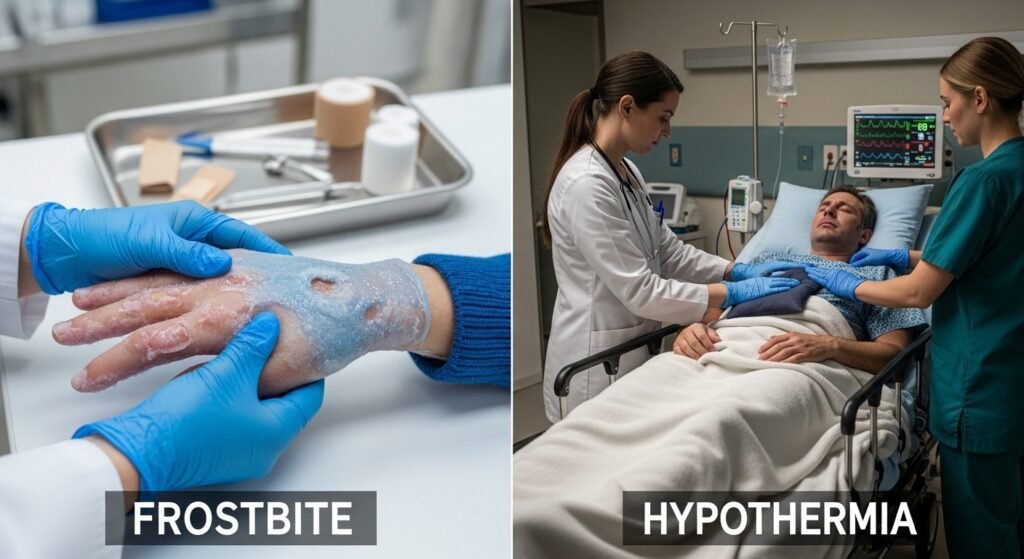
Frostbite most commonly affects exposed extremities — fingers, toes, ears, nose, and cheeks. Degrees of frostbite parallel burn classification. Frostnip (superficial, reversible whitening of skin with numbness — no tissue damage) is managed with gentle rewarming. Superficial frostbite (skin frozen but deep tissues spared) and deep frostbite (full-thickness tissue freezing with blistering and potential tissue loss) require specific clinic management.
Frostbite management centers on rapid rewarming in water at 37–40°C (99–104°F) — which should not be initiated until the patient is not at risk of refreezing (refreezing of thawed tissue causes worse damage than maintaining the freeze until definitive care). Ibuprofen reduces prostaglandin-mediated injury. Aloe vera applications to intact blisters protect tissue. Hemorrhagic blisters (bloody fluid indicating deep injury) are left intact. Specialist evaluation and potentially thrombolytic therapy (tPA) may save severely frostbitten digits when administered within 24 hours at specialized centers.
Hypothermia
Hypothermia — core temperature below 35°C (95°F) — is classified as mild (32–35°C), moderate (28–32°C), or severe (below 28°C). Mild hypothermia causes shivering, confusion, and poor coordination — managed with passive rewarming (dry insulating blankets, warm environment) and warm sweet beverages in conscious patients. Moderate and severe hypothermia require active external rewarming (warming blankets, warm IV fluids) and potentially active core rewarming techniques (warmed humidified oxygen, warm peritoneal or bladder irrigation) — these require emergency facility care.
Conclusion
Cold injuries require prompt recognition and appropriate warming protocols. The guiding principle for frostbite management is “do not thaw until definitive care is available” — premature thawing followed by refreezing causes devastating additional tissue injury. For hypothermia, “no one is dead until warm and dead” guides aggressive resuscitation even in patients who appear deceased from severe cold exposure.
FAQs – Cold Injuries
Q1. Should I rub frostbitten skin to warm it?
A: No — rubbing frostbitten tissue causes additional mechanical injury to frozen, fragile cells. Gentle handling and controlled rewarming in warm water are appropriate. Never rub, walk on, or apply direct heat (fire, electric blanket, heating pad) to frostbitten tissue.
Q2. Can alcohol help with cold exposure?
A: No — and it worsens cold injury risk. Alcohol causes peripheral vasodilation that accelerates heat loss, masks the sensation of cold, impairs shivering, and reduces awareness of dangerous cold exposure. Alcohol is a significant risk factor for cold injury.
Q3. How long does it take for frostbitten tissue to recover?
A: Recovery takes weeks to months. The final extent of tissue loss (whether digits or limbs will be preserved) often cannot be determined for 4–8 weeks after injury — tissue that initially appears necrotic may recover. Early amputation decisions are avoided unless wet gangrene or infection demands earlier intervention.
Q4. Who is at highest risk for hypothermia?
A: Elderly individuals (impaired thermoregulation, reduced shivering response, impaired vasoconstriction), people who are homeless, those with alcohol or drug intoxication (which impairs temperature regulation and risk perception), infants (large body surface to volume ratio), and those on certain medications (antipsychotics, sedatives) that impair thermoregulation.
Q5. Can hypothermia occur indoors?
A: Yes. Elderly individuals in poorly heated homes can develop hypothermia at temperatures that healthy adults tolerate easily. Indoor hypothermia affects elderly people with impaired thermoregulation, those on medications affecting temperature control, and infants in inadequately heated environments.