Animal bites — from dogs, cats, wild animals, and in some settings exotic pets — create immediate concerns about wound infection and, for certain animal exposures, the potentially fatal rabies virus. More than 4.5 million dog bites occur annually in the United States, with approximately 800,000 requiring medical attention. Prompt, thorough clinic evaluation determines appropriate wound management, antibiotic prophylaxis, and rabies risk assessment. This guide explains how clinics evaluate and manage animal bites.
Wound Management
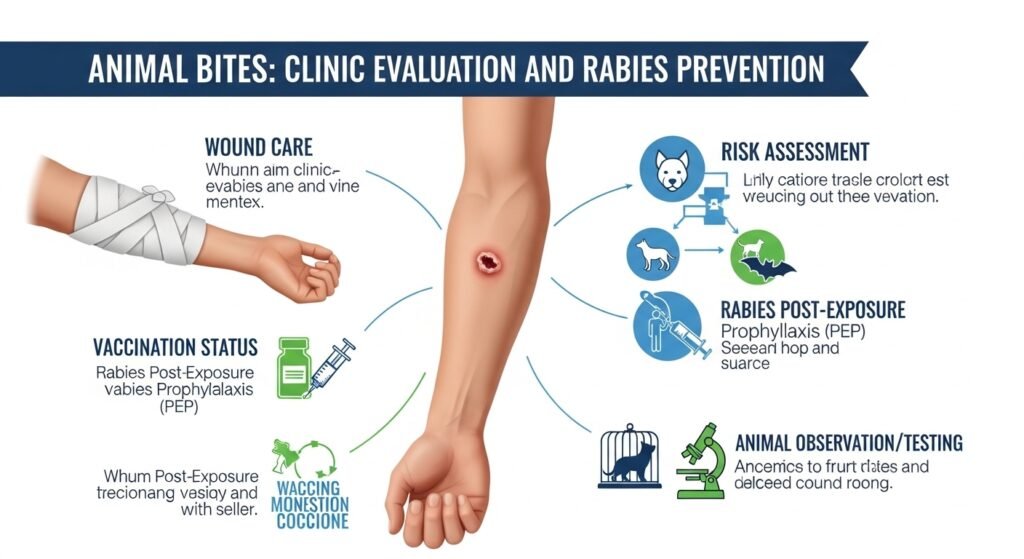
Thorough irrigation of the wound with copious water under pressure is the single most important first aid and clinical intervention — reducing infection risk dramatically. Wound closure practices vary: dog bite wounds may be closed primarily (sutured) when on the face (cosmetic concern, good blood supply) but are often left open or loosely closed on the hands and lower extremities, where infection risk is highest. Cat bites — though seemingly minor — carry a particularly high infection risk from Pasteurella multocida and are frequently managed with antibiotics and delayed closure or no closure.
Antibiotic Prophylaxis
Amoxicillin-clavulanate is the standard antibiotic prophylaxis for high-risk animal bites — covering the mixed oral bacteria of dogs and cats including Pasteurella, Capnocytophaga (particularly dangerous in immunocompromised and asplenic patients), and anaerobes. High-risk bites warranting prophylaxis include: hand bites, deep puncture wounds, bite wounds in immunocompromised patients, and delayed presentation (over 8 hours).
Rabies Risk Assessment
Rabies — virtually always fatal once symptoms develop — requires urgent risk assessment following exposures. Dogs, cats, and ferrets can be observed for 10 days — if they remain healthy, rabies transmission did not occur. Wildlife (raccoons, bats, foxes, skunks, coyotes) are assumed rabid unless captured and tested negative. Bat bites require particular vigilance — bats have small teeth that may leave unnoticed bite marks. When rabies exposure cannot be excluded, post-exposure prophylaxis (PEP) — rabies immune globulin at the bite site plus rabies vaccine series — is 100% effective when given promptly before symptoms develop.
Conclusion
All but the most trivial animal bites warrant clinic evaluation, given the infection and rabies risk they carry. Report the bite to local animal control — this enables quarantine of the biting animal and assessment of its vaccination status, directly informing the rabies risk decision. Prompt wound cleaning, appropriate antibiotic prophylaxis when indicated, and rabies risk assessment through your clinic prevents the serious complications that delayed treatment invites.
FAQs – Animal Bites
Q1. All dogs are vaccinated in the US — do I still need to worry about rabies from a dog bite?
A: Many dogs are vaccinated, but not all. Confirm the dog’s vaccination status through the owner or animal control. If the dog cannot be identified, observed, or confirmed vaccinated, rabies risk assessment with possible PEP is warranted.
Q2. Is a cat scratch dangerous?
A: Cat scratch disease — caused by Bartonella henselae transmitted through cat scratches or bites — causes lymph node swelling, fever, and fatigue, typically in the region draining the scratch site. It is usually self-limited in healthy individuals but can be serious in immunocompromised patients. Antibiotic treatment is used for severe or prolonged cases.
Q3. What should I do immediately after a bite?
A: Wash the wound thoroughly with soap and water for at least 5 minutes. Apply an antiseptic. If bleeding is significant, apply direct pressure. Then seek clinic evaluation — ideally within a few hours, and certainly within 24 hours for all but the most minor abrasions from a domestic animal with known vaccination history.
Q4. Can I get tetanus from an animal bite?
A: Yes. Animal bite wounds — particularly deep puncture wounds — are tetanus-prone. Your clinic assesses your tetanus vaccination status and provides a booster if your last dose was more than 5 years ago (for high-risk wounds).
Q5. Are wild animal bites more dangerous than domestic animal bites?
A: Wild animals carry higher rabies risk than vaccinated domestic animals. Many wild animals are also not candidates for the 10-day observation period that applies to domestic dogs and cats — necessitating rabies PEP when wild animal bites cannot be assessed. Infection risk from wild animal bites is similar to domestic animal bites.