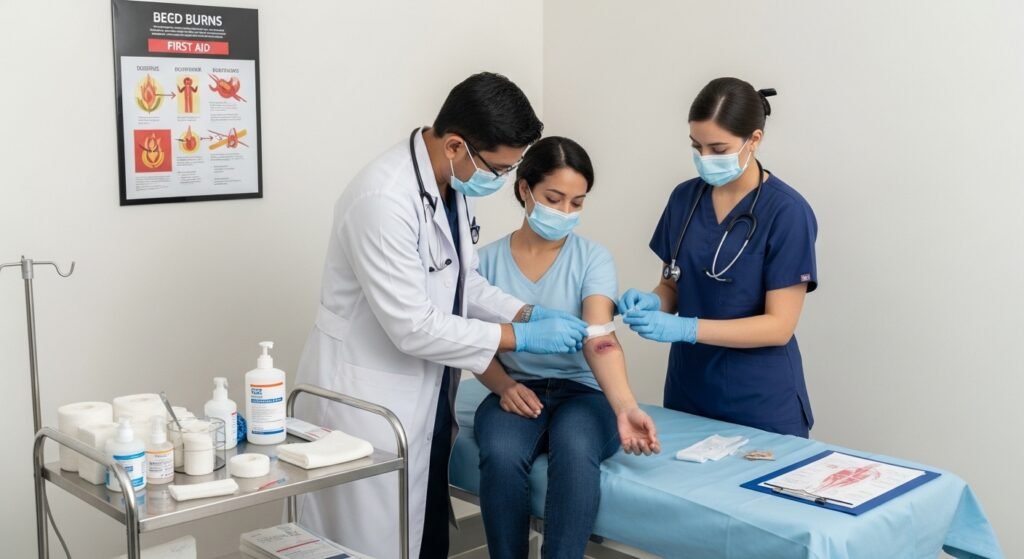
Burns — injuries to skin and underlying tissue from heat, electricity, chemicals, or radiation — range from minor superficial burns managed with home first aid to life-threatening injuries requiring specialized burn center care. Knowing which burns can be managed at an urgent care or primary care clinic and which require emergency or specialist evaluation is an important safety distinction. This guide explains burn classification and clinical management.
Burn Classification
Superficial (First-Degree) Burns
Affect only the outer epidermis. Appear red, dry, and painful (like sunburn). Heal within 3–7 days without medical treatment. Managed with cool water application (not ice), aloe vera or moisturizer, and OTC pain relief.
Partial-Thickness (Second-Degree) Burns
Extend into the dermis. Appear blistered, moist, intensely painful. Superficial partial-thickness burns heal within 2–3 weeks with proper wound care. Deep partial-thickness burns take longer and may require skin grafting. Clinic management includes blister care (leaving intact when possible), silver-containing antimicrobial dressings, and regular wound assessment.
Full-Thickness (Third-Degree) Burns
Destroy all skin layers. Appear white, leathery, or charred — surprisingly painless because nerve endings are destroyed. Always require specialist evaluation and likely skin grafting. Any third-degree burn requires emergency evaluation.
Burns Requiring Emergency Care
Refer to emergency services for: burns involving the face, hands, feet, genitals, or major joints; circumferential burns; burns from electrical sources (invisible internal injuries are common); chemical burns to the eyes or face; inhalation injury; burns covering more than 10% body surface area; or any full-thickness burn.
Conclusion
Minor burns are common and most are manageable with appropriate first aid and outpatient wound care. The key clinical decision is identifying which burns exceed outpatient management capabilities. When in doubt — particularly for burns involving critical body areas, electrical or chemical exposure, or significant extent — err on the side of emergency evaluation. Proper early burn wound care significantly affects healing and scarring outcomes.
FAQs – Burns
Q1. Should I apply butter or ice to a burn?
A: Neither. Butter and other household products trap heat and increase infection risk. Ice causes further tissue injury through cold damage. Cool running water (15–20 minutes) is the correct first aid — it removes heat, reduces pain, and decreases tissue damage without additional injury.
Q2. Should burn blisters be popped?
A: Small intact blisters are best left alone — the blister provides a sterile biological dressing that protects the underlying tissue. Large blisters in locations likely to break from friction (palms, soles, pressure areas) can be drained under clean conditions. Never remove the blister roof, which continues to provide protection.
Q3. How is burn size estimated?
A: The “Rule of Nines” divides the body surface into regions each representing 9% of total body surface area (TBSA): head 9%, each arm 9%, chest 9%, abdomen 9%, each thigh 9%, each lower leg 9%, back 18%. The patient’s palm represents approximately 1% TBSA, useful for estimating scattered small burns.
Q4. When can I return to work after a burn injury?
A: Return to work depends on burn location, depth, severity, and job demands. Minor burns not involving hands or other critical work-related body areas may allow return in days. Burns affecting hand function or requiring wound care may require weeks. Your clinic provides work restriction guidance based on specific injury characteristics.
Q5. Do burns always leave scars?
A: Superficial burns heal without significant scarring. Deep partial-thickness and full-thickness burns cause hypertrophic (raised, thick, red) scarring. Appropriate wound care, early grafting when indicated, and pressure garment therapy reduce scar formation. Silicone-based products and massage improve established scars.