Gastroesophageal reflux disease (GERD) — the chronic condition of stomach acid flowing back into the esophagus — affects approximately 20% of American adults. While occasional heartburn is common and normal, GERD produces symptoms at least twice a week and, without treatment, can lead to esophageal damage (erosive esophagitis), Barrett’s esophagus, and a small but real increased risk of esophageal adenocarcinoma. Medical clinics diagnose and manage GERD through lifestyle guidance, medication, and appropriate specialist referral. This guide explains comprehensive GERD care.
Symptoms and Red Flags
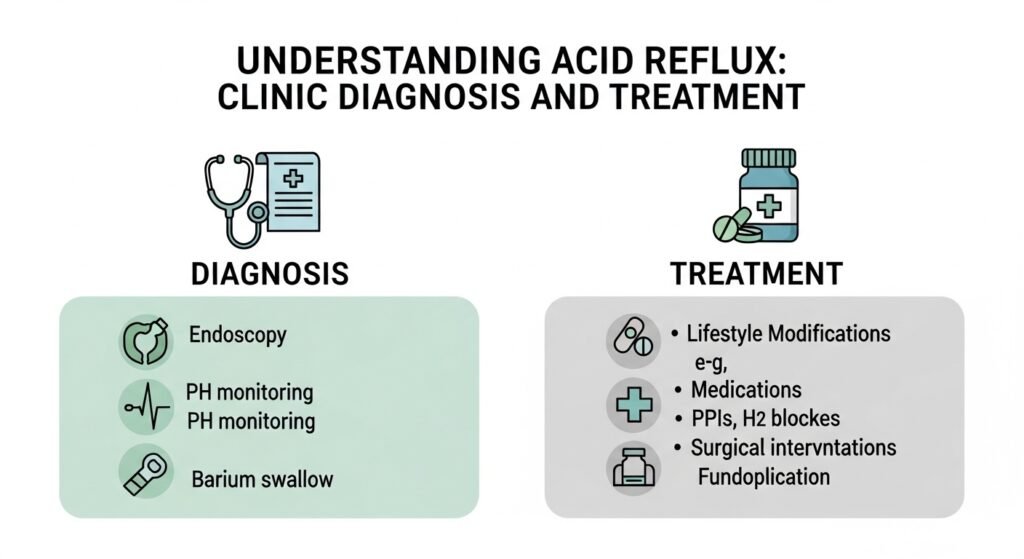
Classic GERD symptoms are heartburn (burning sensation rising from stomach to chest) and regurgitation (acid or food coming up into the mouth). Atypical GERD can present as chronic cough, laryngitis, hoarseness, asthma exacerbation, or dental erosion. Red flags requiring urgent investigation include difficulty swallowing, painful swallowing, unexplained weight loss, vomiting blood, and chronic symptoms in patients over 50 — these prompt endoscopy to evaluate for Barrett’s esophagus or esophageal cancer.
Lifestyle Modifications
Elevating the head of the bed, avoiding large meals, not lying down within three hours of eating, reducing trigger foods (chocolate, caffeine, alcohol, fatty foods, citrus, tomatoes), losing weight if overweight, and quitting smoking all reduce GERD symptoms. Lifestyle modifications alone are sufficient for mild GERD in many patients.
Medications
Proton pump inhibitors (omeprazole, lansoprazole, pantoprazole) are the most effective medications for GERD — reducing acid production significantly and healing erosive esophagitis. H2 blockers (famotidine) provide less complete but useful acid suppression. These medications are appropriate for most GERD patients when needed; however, long-term PPI use has been associated with some risks (C. difficile infection, bone density, B12 absorption) that warrant periodic reassessment of ongoing need.
Conclusion
GERD is extremely common and very effectively managed through a combination of lifestyle modification and, when needed, medication. Do not normalize chronic heartburn as simply “the way things are” — effective treatment prevents the complications that untreated reflux can cause. Seek clinic evaluation for persistent or concerning GERD symptoms and discuss the best management approach for your specific situation.
FAQs – Acid Reflux and GERD
Q1. What is Barrett’s esophagus?
A: A complication of chronic GERD in which the esophageal lining is replaced by intestinal-type cells as a response to repeated acid exposure. Barrett’s esophagus increases risk of esophageal adenocarcinoma and requires surveillance endoscopy to detect dysplasia early.
Q2. Can GERD be cured without medication?
A: For mild GERD driven by lifestyle factors, meaningful improvement or resolution through weight loss, dietary modification, and positional changes is achievable without medication. Laparoscopic fundoplication surgery offers a durable mechanical solution for patients who prefer to avoid lifelong medication.
Q3. Is it safe to take PPIs long-term?
A: PPIs have a generally good safety profile, but long-term use has been associated with small increased risks of bone fractures, magnesium deficiency, C. difficile-associated diarrhea, and vitamin B12 absorption impairment. The benefits of appropriate GERD treatment typically outweigh these risks — your doctor should periodically reassess whether ongoing PPI use is necessary.
Q4. Can GERD cause respiratory symptoms?
A: Yes. Acid reflux can trigger or worsen asthma, cause chronic cough, laryngitis, and hoarseness (laryngopharyngeal reflux), and produce a sensation of a lump in the throat (globus). These atypical presentations are easily mistaken for other conditions.
Q5. What foods trigger acid reflux?
A: Common triggers include chocolate, coffee, alcohol, fatty and fried foods, citrus fruits and juices, tomato-based foods, mint, and spicy foods. Triggers are individual — keeping a food diary helps identify your personal pattern.