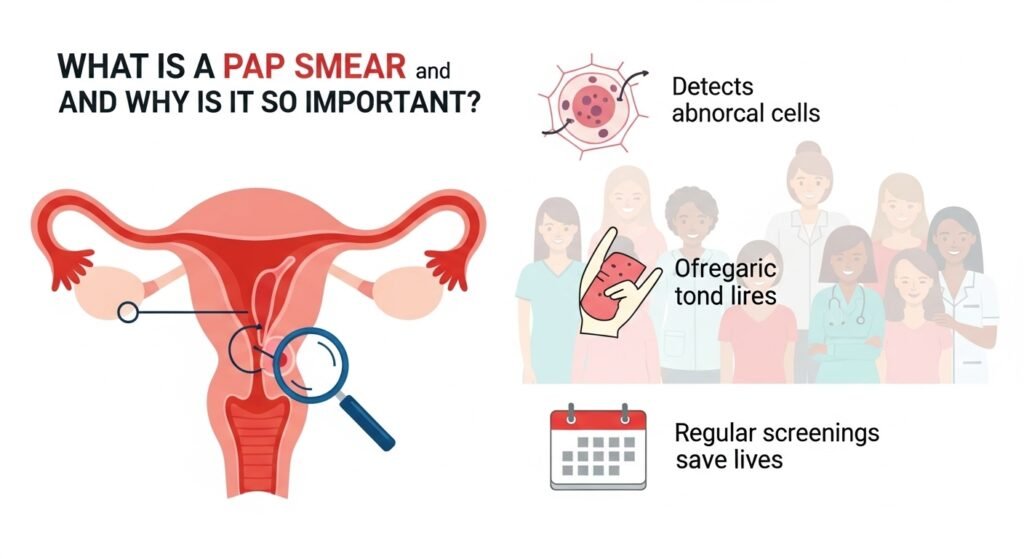
The Pap smear (Papanicolaou test) is a cervical cancer screening test that has reduced cervical cancer incidence and mortality by approximately 70% since its widespread adoption in the 1950s — one of the most successful cancer screening programs in medical history. It identifies cervical cell abnormalities (including precancerous changes) that can be treated before cancer develops, or detects cancer at its earliest, most curable stage. Despite its proven life-saving value, many eligible women remain underscreened. This guide explains what a Pap smear is, how it is done, and why it remains essential.
What Is Tested
During a pelvic exam, a healthcare provider collects cells from the cervix (the lower end of the uterus opening into the vagina) using a small brush and spatula. The cells are preserved in liquid and sent to a laboratory where cytologists examine them for abnormalities. The test is often combined with HPV (human papillomavirus) testing — since HPV causes virtually all cervical cancers, HPV co-testing improves sensitivity and allows longer intervals between normal tests.
Screening Schedule
Current guidelines (USPSTF, ASCCP): Pap smear alone every 3 years for women ages 21–29. Pap smear plus HPV co-testing every 5 years (or Pap alone every 3 years) for women ages 30–65. Women who have had a total hysterectomy for benign reasons do not need cervical screening. Screening can discontinue at 65 for women with adequate prior negative screening and no high-risk history.
When Results Are Abnormal
Abnormal Pap smear results range from ASCUS (atypical squamous cells of undetermined significance — often managed with repeat testing or HPV testing) to low-grade and high-grade squamous intraepithelial lesions (LSIL, HSIL) to cancer. Results guide management from surveillance to colposcopy (magnified cervical examination with biopsy) to treatment of precancerous lesions before cancer develops.
Conclusion
The Pap smear is one of medicine’s greatest success stories — a simple, fast, clinic-based test that has transformed cervical cancer from a leading cancer killer to a largely preventable disease. Commit to your recommended screening schedule. HPV vaccination (ideally before sexual debut) provides complementary primary prevention that, combined with screening, will eventually reduce cervical cancer to near-elimination.
FAQs – Pap Smear
Q1. Does a Pap smear detect other cancers?
A: A Pap smear is specifically designed to screen for cervical cancer and precancerous changes. Incidentally, it sometimes identifies endometrial cancer cells in postmenopausal women, but it is not an effective test for uterine, ovarian, or vaginal cancer.
Q2. Does an abnormal Pap smear mean I have cancer?
A: No. Most abnormal Pap results do not indicate cancer. ASCUS and LSIL are common mild abnormalities, usually related to HPV infection, that often resolve without treatment. HSIL requires colposcopy but still represents precancerous change rather than cancer in most cases.
Q3. Do I still need Pap smears if I’ve received the HPV vaccine?
A: Yes. The HPV vaccine covers the most common cancer-causing HPV strains but not all of them. Cervical screening continues regardless of vaccination status, though intervals may be extended when HPV co-testing is used.
Q4. Can I have a Pap smear while menstruating?
A: Heavy menstrual flow can interfere with test results. It is preferable to schedule the Pap smear mid-cycle (10–20 days after the first day of the last period). Light spotting does not typically affect results. Check with your clinic if you are unsure whether to reschedule.
Q5. At what age should Pap smears stop?
A: Cervical cancer screening is generally discontinued at age 65 for women with adequate prior screening (three consecutive negative Pap tests or two negative co-tests within the past 10 years, with the most recent within 5 years). Women with prior high-grade lesion treatment may need continued screening beyond 65.