Ear, Nose, and Throat (ENT) specialists — also called otolaryngologists — diagnose and treat conditions affecting the head and neck, including all disorders of the ears, nasal passages, sinuses, throat, larynx (voice box), thyroid, salivary glands, and surrounding structures. ENT clinics provide both medical management and surgical treatment for an enormously broad range of conditions. This guide explains what ENT clinics treat and when to seek otolaryngological care.
Ear Conditions
ENT clinics manage hearing loss (including evaluation for hearing aids and cochlear implants), chronic ear infections (otitis media with effusion, cholesteatoma), tinnitus (ringing in the ears), balance disorders (vertigo, Ménière’s disease), and eardrum perforations. Audiologists often work within ENT clinics to provide comprehensive hearing evaluation and rehabilitation.
Nose and Sinus Conditions
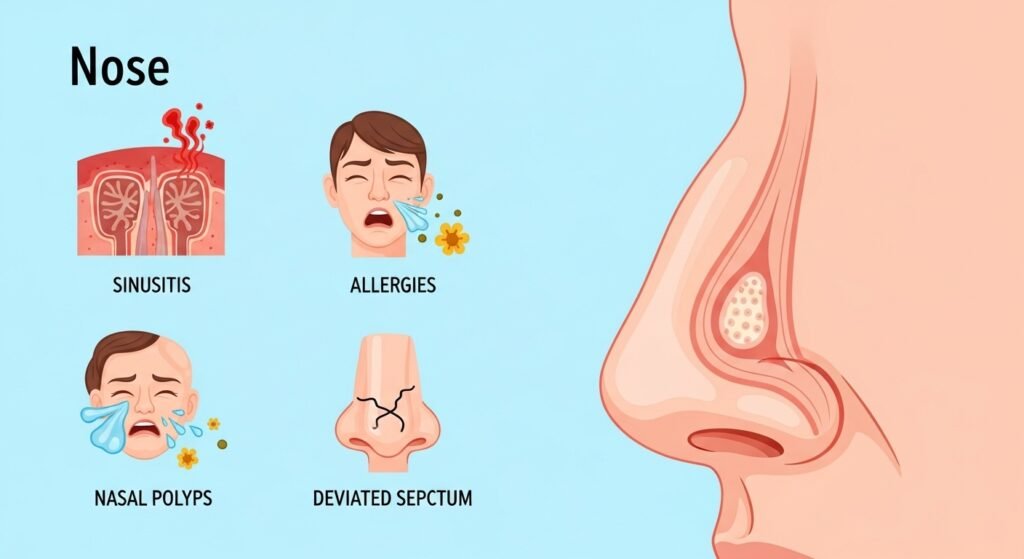
Chronic sinusitis, allergic rhinitis, nasal polyps, deviated nasal septum, and loss of smell are all managed through ENT clinics. ENTs perform endoscopic sinus surgery for chronic sinusitis not responding to medical management — a minimally invasive procedure with excellent outcomes that restores normal sinus drainage.
Throat and Voice Conditions
Tonsillitis, sleep apnea (evaluation and surgical treatment options), voice disorders, swallowing difficulties, and throat cancers are evaluated and treated by ENTs. Laryngoscopy — direct visualization of the larynx and vocal cords — is a standard diagnostic procedure in ENT clinics.
Head and Neck Cancers
ENT surgeons are the primary surgical specialists for head and neck cancers — including throat, larynx, oral cavity, salivary gland, and thyroid cancers. They work within multidisciplinary oncology teams providing surgical treatment coordinated with radiation oncology and medical oncology.
Conclusion
ENT clinics provide specialized expertise for a wide range of conditions that primary care addresses initially but often requires specialty management. Chronic sinus disease, hearing loss, sleep-disordered breathing, voice problems, and head and neck masses all warrant ENT evaluation. Do not normalize persistent symptoms that an ENT might effectively treat.
FAQs – ENT Clinics
Q1. When should I see an ENT instead of my primary care doctor?
A: Refer to ENT for persistent sinusitis (12 weeks or more despite treatment), hearing loss, tinnitus, vertigo, voice changes lasting more than 2–3 weeks, swallowing difficulty, and any neck mass or suspicious oral lesion.
Q2. What is a deviated septum and does it need to be fixed?
A: A deviated septum is a shift of the nasal dividing wall away from the midline, causing nasal obstruction. Treatment (septoplasty) is indicated when the deviation significantly impairs breathing and does not respond to medical management.
Q3. Can adults have their tonsils removed?
A: Yes. Tonsillectomy is performed in adults for recurrent tonsillitis, obstructive sleep apnea, and tonsillar pathology. Recovery takes somewhat longer in adults than children (7–14 days of throat pain).
Q4. What causes tinnitus?
A: Tinnitus (ringing, buzzing, or other phantom sounds) has many causes including noise-induced hearing loss, ear infections, earwax accumulation, age-related hearing loss, medications, and less commonly, vascular or neurological conditions. An ENT evaluation determines the cause and guides management.
Q5. Is hearing loss treatable?
A: It depends on the type. Conductive hearing loss (from wax, fluid, or mechanical issues) is often correctable. Sensorineural hearing loss (from nerve damage) is generally not reversible but is effectively managed with hearing aids or cochlear implants.