A biopsy — the removal of a small tissue sample for laboratory examination — is the gold standard for diagnosing many conditions, including cancer, inflammatory disease, and infection. Various biopsy procedures are performed at medical clinics, ranging from simple skin biopsies in a dermatology office to image-guided core needle biopsies in radiology suites. Understanding what the biopsy process involves reduces anxiety and helps you prepare appropriately for the procedure. This guide explains biopsy procedures at the clinical level.
Types of Biopsy
Punch and Shave Skin Biopsy
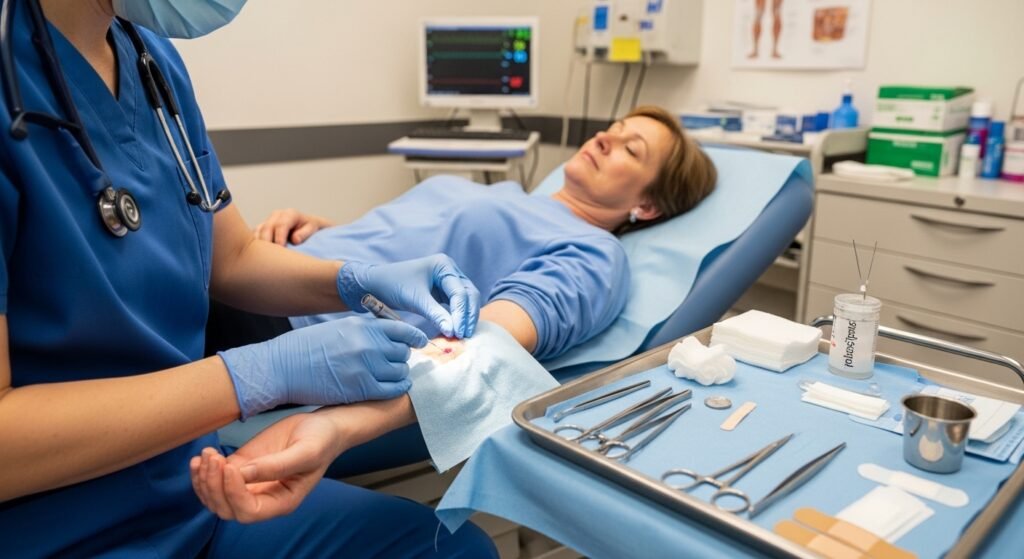
The most common clinic-based biopsy — performed in dermatology offices under local anesthesia. A circular punch tool or scalpel removes a small disc or shave of skin for pathological examination. Closure requires 1–2 sutures or wound closure strips. Results typically return in 5–7 days.
Core Needle Biopsy
A hollow needle passed through skin into a solid mass removes a cylinder of tissue for analysis. Image guidance (ultrasound or CT) directs the needle precisely to the target. Commonly used for breast masses, thyroid nodules, liver lesions, kidney masses, and lymph nodes. Performed under local anesthesia, requiring no general anesthesia or surgical incision.
Fine Needle Aspiration (FNA)
A thin needle aspirates cells from a mass — commonly thyroid nodules and superficial lymph nodes. Less invasive than core needle biopsy but provides fewer cells, sometimes yielding inconclusive results that require repeat sampling or core biopsy.
After the Biopsy
Most biopsy procedures cause minimal post-procedure discomfort managed with acetaminophen or ibuprofen. Bruising and tenderness at the site are normal. Skin biopsy wound care instructions (keeping clean and dry, watchfor infection signs) are provided. Results typically take 5–14 days depending on specimen type and tests required.
Conclusion
Biopsy is an essential diagnostic procedure that provides definitive tissue diagnosis for many conditions. Modern image-guided biopsy techniques are minimally invasive, performed under local anesthesia, and remarkably accurate. While awaiting results is anxiety-provoking, a biopsy diagnosis is necessary for planning the most appropriate treatment — a necessary step toward definitive care.
FAQs – Biopsy Procedures
Q1. Does a biopsy hurt?
A: Local anesthesia makes most biopsies very comfortable during the procedure. Some pressure sensation is normal. Post-procedure soreness lasting 1–3 days is typical and managed with over-the-counter analgesics. Discuss any anxiety or discomfort concerns with your clinician before the procedure.
Q2. Can a biopsy spread cancer?
A: This concern is a common misconception. Core needle biopsy of cancer does not clinically meaningfully spread cancer cells — the benefit of accurate diagnosis and appropriate treatment planning vastly outweighs any theoretical risk. Decisions to proceed without biopsy should never be based on this concern.
Q3. How long does it take to get biopsy results?
A: Routine histological examination takes 5–7 business days. Special stains, immunohistochemistry, or molecular testing (required for some cancers) adds additional time, potentially 2–3 weeks for complete results. Your clinic will notify you when results are available.
Q4. What does a pathologist do with a biopsy sample?
A: A pathologist examines the tissue under a microscope, describes cell characteristics (size, shape, nuclear features, mitotic activity), and provides a diagnosis. For cancer specimens, pathologists also characterize the cancer type, grade (aggressiveness), margin status, and receptor profiles that guide treatment decisions.
Q5. What should I do if I haven’t received my biopsy results within the expected timeframe?
A: Contact your clinic proactively — do not assume no news is good news. Biopsy results require active follow-up to ensure both receipt and understanding of findings. Ask the clinic when results are expected and follow up if that timeframe passes.