Whether you are undergoing a minor outpatient procedure or preparing for major surgery, proper preparation significantly affects your safety, comfort, and recovery. Medical clinics coordinate much of the pre-surgical process — from pre-operative evaluations and medical clearance to patient education about what to expect on the day of surgery and during recovery. This guide explains how to prepare for surgery through your medical clinic.
The Pre-Operative Evaluation
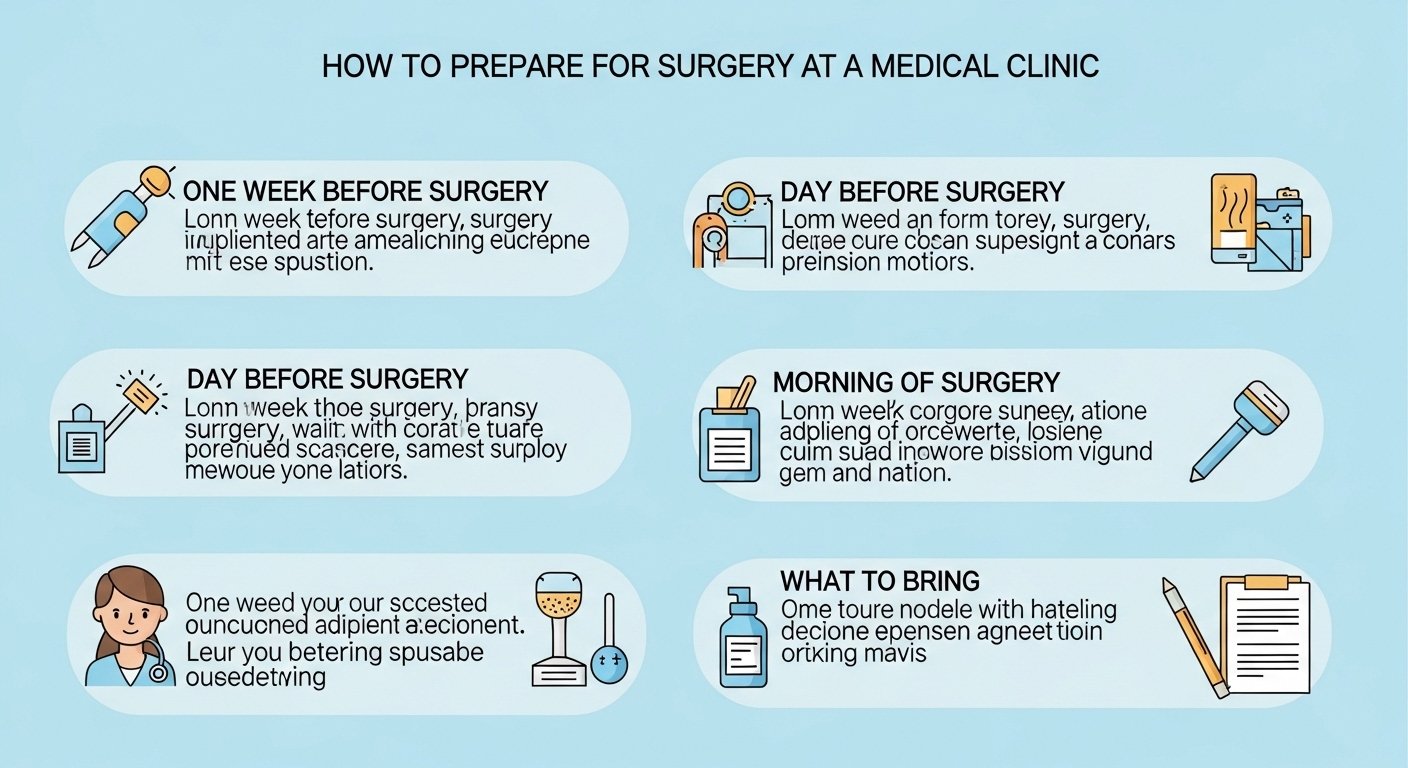
Before surgery, your primary care clinic typically performs a pre-operative evaluation — reviewing your complete medical history, current medications, allergies, previous anesthetic experiences, and overall health status to assess surgical risk. Blood tests (CBC, metabolic panel, coagulation studies), chest X-ray, and ECG may be ordered based on your age, health conditions, and the complexity of the planned procedure. This evaluation identifies and optimizes any medical conditions (blood pressure, blood sugar, cardiac stability) before proceeding to surgery.
Medication Management Before Surgery
Certain medications must be adjusted or stopped before surgery: blood thinners (warfarin, aspirin, clopidogrel, direct oral anticoagulants) are typically paused to reduce bleeding risk. Diabetes medications require specific instructions based on the NPO (nothing by mouth) fasting period. Herbal supplements (ginkgo, garlic, ginseng, St. John’s Wort) are usually stopped 1–2 weeks before surgery due to anesthetic interactions. Never stop medications without explicit guidance from your surgeon and clinic provider.
Fasting Instructions
Most surgeries require NPO (nothing by mouth) for a specified period before surgery — typically 8+ hours for solid food, 4–6 hours for dairy or non-clear liquids, and 2 hours for clear liquids under ERAS (Enhanced Recovery After Surgery) protocols at many institutions. Follow your surgical team’s specific instructions precisely. Failure to fast appropriately can result in surgery cancellation.
Mental and Practical Preparation
Arrange for a responsible adult to drive you home and stay with you for 24 hours post-procedure (required for all procedures involving sedation or general anesthesia). Prepare your recovery space at home — comfortable rest area, easy-to-access food and supplies, any required equipment. Mental preparation — understanding what the procedure involves, what to expect during recovery, and what warning signs to watch for — reduces anxiety and supports better outcomes.
Conclusion
Surgical preparation through your clinic ensures that you enter the operating room in the best possible medical condition, with the medication adjustments, lab work, and medical clearance that optimize your safety and recovery. Follow all pre-operative instructions precisely — they exist because they improve outcomes. Ask every question you have before surgery day.
FAQs – Surgical Preparation
Q1. Do I need a physical exam before every surgery?
A: Requirements vary by procedure complexity, institution, and your health status. Minor procedures in healthy patients may need minimal pre-operative evaluation. Major surgery or patients with significant medical conditions require comprehensive pre-operative assessment.
Q2. When should I stop smoking before surgery?
A: Ideally at least 4–8 weeks before surgery — smoking impairs wound healing, increases respiratory complications, and reduces surgical outcomes. Even stopping 24–48 hours before surgery reduces carbon monoxide levels and improves oxygen delivery.
Q3. What should I wear on surgery day?
A: Comfortable, loose clothing you can easily change out of and back into. Leave jewelry, contact lenses, and valuables at home. Wear minimal or no makeup (makes monitoring more difficult). Remove nail polish if requested (interferes with pulse oximetry at some institutions).
Q4. Can I take my morning medications on surgery day?
A: Follow your surgical team’s specific instructions. Blood pressure medications and most heart medications are typically taken with a small sip of water. Diabetes, blood thinner, and certain other medications require specific guidance. Always clarify with your surgeon and anesthesiologist.
Q5. What happens if I develop a cold before scheduled surgery?
A: Contact your surgical team immediately. Respiratory infections increase anesthetic and surgical risks. Many surgeons elect to postpone elective surgery until the patient has fully recovered.