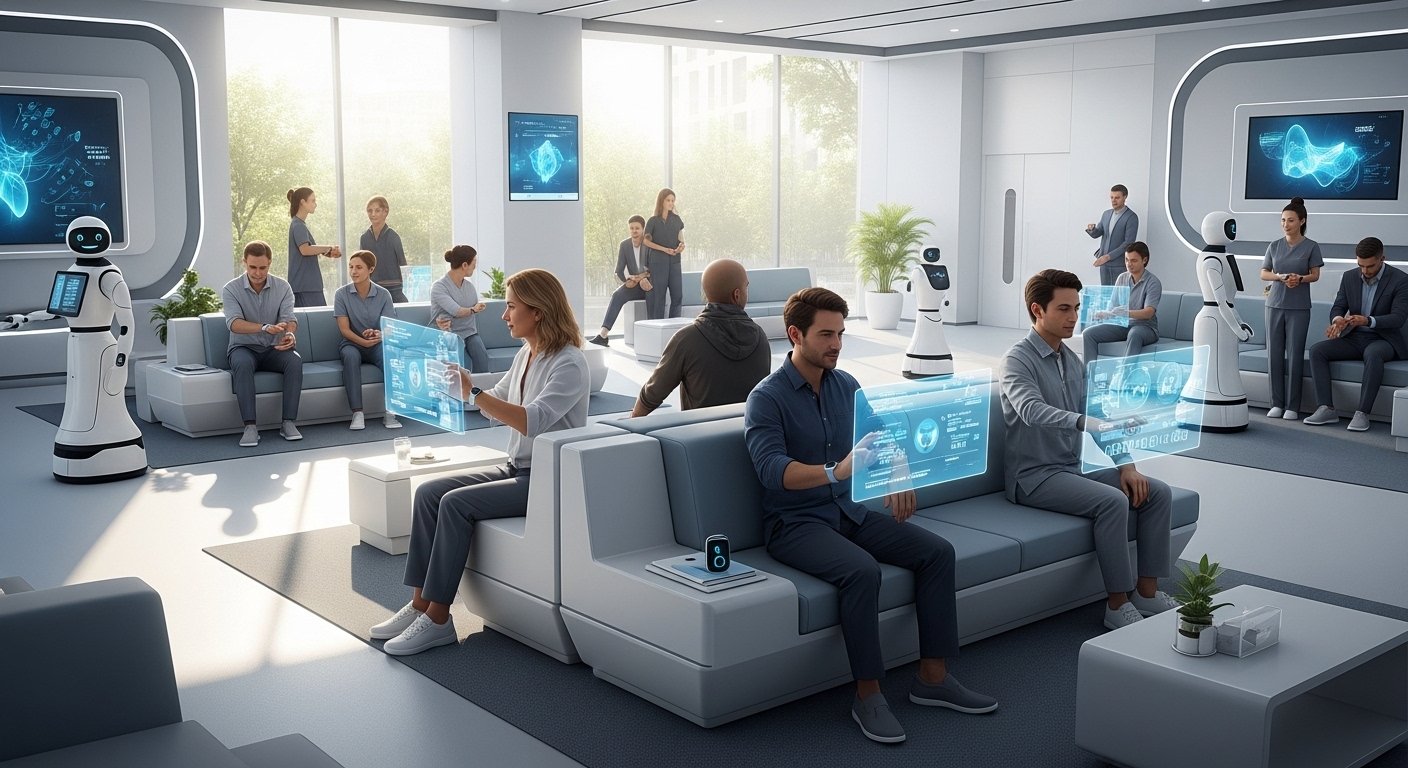
Medical clinics are evolving rapidly in response to technological innovation, changing patient expectations, workforce shifts, and the healthcare system’s growing focus on value rather than volume. Understanding the trends shaping the future of clinics helps patients anticipate what their healthcare experience will look like in coming years and how to position themselves to benefit from emerging advances. This guide explores the most significant trends transforming medical clinics.
Artificial Intelligence in Clinical Practice
Artificial intelligence is increasingly integrated into clinical workflows — reading diagnostic images (X-rays, retinal scans, skin lesion photos) with accuracy rivaling experienced specialists, analyzing patterns in electronic health records to predict patient deterioration or disease onset, supporting clinical decision-making with evidence-based recommendations, and automating administrative tasks like prior authorization and scheduling. AI tools will not replace clinicians but will extend their capabilities and efficiency.
The Expansion of Remote Monitoring
Connected health devices — smartwatches monitoring heart rhythm, continuous glucose monitors transmitting blood sugar data, home blood pressure cuffs syncing to patient portals, and remote stethoscopes enabling virtual cardiac auscultation — are transforming chronic disease management. Clinics are building programs that use this stream of real-world data to detect problems early and intervene before hospitalizations occur.
Team-Based and Value-Based Care Models
The traditional solo physician model is giving way to team-based care — physician-nurse practitioner-pharmacist-health coach teams that collectively manage patient panels more comprehensively than any single provider can. Simultaneously, payment models are shifting from fee-for-service (pay per visit) to value-based arrangements that reward clinics for keeping patients healthy rather than for the volume of services provided.
Retail and Pharmacy Clinic Expansion
CVS MinuteClinic, Walgreens Health, Amazon Clinic, and similar retail health entrants are expanding convenient, low-acuity care access — threatening traditional clinic models while simultaneously extending reach to patients who otherwise would not seek care. Integration between retail health encounters and primary care records is an ongoing challenge.
Genomics and Precision Medicine
Genetic testing is increasingly informing clinical decision-making — identifying medication metabolism profiles that guide drug selection and dosing, detecting hereditary disease risks that guide surveillance intensity, and enabling targeted cancer treatment matched to tumor genetic profiles. Clinics are integrating genomic counseling and testing into preventive and chronic care programs.
Conclusion
The medical clinic of the future will be more connected, more data-informed, more team-based, and more proactively engaged in disease prevention than today’s clinic model. Patients who embrace patient portals, wearable health technology, telehealth, and active participation in their care will be best positioned to benefit from these innovations. The fundamental mission remains unchanged — keeping people healthy and caring for them when they are not — but the tools and approaches are advancing rapidly.
FAQs – Future of Medical Clinics
Q1. Will AI replace doctors at clinics?
A: No. AI will augment clinical capabilities — reading images faster, flagging at-risk patients, reducing documentation burden — but clinical judgment, patient relationships, and complex decision-making will remain fundamentally human. AI in medicine is a partnership tool, not a replacement.
Q2. What is a “medical home”?
A: A patient-centered medical home (PCMH) is a primary care model that provides comprehensive, coordinated, accessible care through a team-based approach with strong patient engagement. It is both a care delivery model and an insurance payment model that rewards this approach.
Q3. Will telehealth replace in-person clinic visits entirely?
A: No. Telehealth complements but cannot replace physical examination, in-person diagnostic procedures, and hands-on treatment. The future model combines both modalities strategically — telehealth for appropriate encounters, in-person for everything that requires physical presence.
Q4. How will genetics change my clinic visits?
A: Your genetic profile may eventually inform what medications are prescribed (pharmacogenomics), which cancer screenings are prioritized (based on hereditary risk), and what lifestyle modifications are most impactful for your specific biology. Genetic counseling and testing will become a routine component of comprehensive primary care.
Q5. Are retail health clinics (CVS, Walgreens) as good as traditional clinics?
A: For the limited services they provide — flu shots, minor illness visits, routine screenings — retail clinics are generally comparable in quality to urgent care centers. They are not appropriate for complex medical needs, comprehensive primary care, or patients with multiple chronic conditions. Use them for what they do well, and maintain a relationship with a comprehensive primary care clinic for everything else.