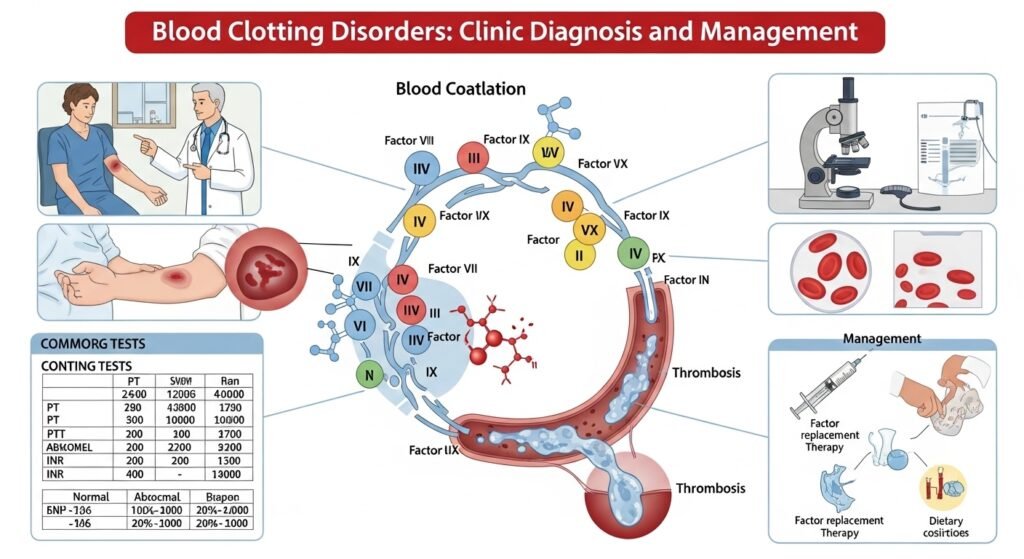
Blood clotting disorders — conditions involving either too much clotting (thrombophilia) or insufficient clotting (bleeding disorders) — represent a critical category of hematological conditions managed through medical clinics and hematology specialists. Deep vein thrombosis (DVT), pulmonary embolism (PE), stroke, and clotting complications of pregnancy fall under the thrombophilia spectrum; hemophilia, von Willebrand disease, and platelet disorders fall under bleeding disorder management. This guide explains how clinics diagnose and manage blood clotting abnormalities.
Thrombophilia: When Blood Clots Too Readily
Inherited thrombophilias (Factor V Leiden, prothrombin gene mutation, protein C/S deficiency, antithrombin deficiency) and acquired thrombophilias (antiphospholipid syndrome, cancer-associated coagulation activation) increase risk of abnormal blood clots. Thrombophilia evaluation is appropriate after unprovoked clot events, recurrent clots, clots at unusual sites (cerebral, splanchnic), recurrent pregnancy loss, and in first-degree relatives of patients with known thrombophilia.
Anticoagulation Management
Treating clotting disorders typically involves anticoagulant medications — warfarin (requiring regular INR monitoring at anticoagulation clinics), direct oral anticoagulants (DOACs: apixaban, rivaroxaban, dabigatran, edoxaban — with no routine monitoring required), and low molecular weight heparin (for certain clinical situations including cancer-associated thrombosis). Many larger clinics have dedicated anticoagulation management services providing structured, safe monitoring of patients on these potentially dangerous medications.
Bleeding Disorders
Inherited bleeding disorders (hemophilia A and B, von Willebrand disease) require specialist management through hematology clinics. Diagnosis involves specific clotting factor level measurements. Treatment uses factor replacement products, desmopressin (for mild hemophilia A and type 1 vWD), and antifibrinolytic medications.
Conclusion
Blood clotting disorders require careful, specialized medical management — both thrombosis prevention and bleeding disorder treatment involve complex medication decisions with serious safety implications. If you have a history of abnormal clotting, unexplained bleeding, or a family history of clotting or bleeding disorders, discuss evaluation and appropriate management with your clinic or a hematology specialist.
FAQs – Blood Clotting Disorders
Q1. What are the symptoms of a blood clot?
A: DVT typically causes swelling, pain, warmth, and redness in a limb — most commonly the calf or thigh. PE causes sudden chest pain, shortness of breath, and rapid heartbeat. Both are emergencies requiring immediate evaluation.
Q2. Should everyone with a blood clot be tested for thrombophilia?
A: No. Thrombophilia testing is selectively indicated — for unprovoked clots, recurrent events, unusual clot locations, or family history. Clots clearly provoked by surgery, trauma, or prolonged immobility in patients with no additional risk factors may not require testing.
Q3. How long do I need anticoagulation after a blood clot?
A: Duration depends on the clot’s circumstances: provoked clots (after surgery or immobility) are typically treated for 3 months; unprovoked clots or high-risk conditions may require long-term or indefinite anticoagulation. Your hematologist or clinic will determine appropriate duration based on individual risk-benefit assessment.
Q4. Is it safe to fly with a clotting disorder?
A: Prolonged air travel increases DVT risk, particularly in patients with thrombophilia or history of clots. Preventive measures (compression stockings, adequate hydration, frequent ambulation) reduce risk. Some patients may require prophylactic anticoagulation for long flights — discuss with your clinician.
Q5. Does aspirin prevent blood clots?
A: Aspirin prevents arterial clots (which cause heart attack and stroke) by reducing platelet aggregation. It is less effective for venous clots (DVT, PE), which require anticoagulant therapy. The role of aspirin in various clotting scenarios is complex and should be individualized.